Design del Gusto, sensory identity and the growing need for authenticity
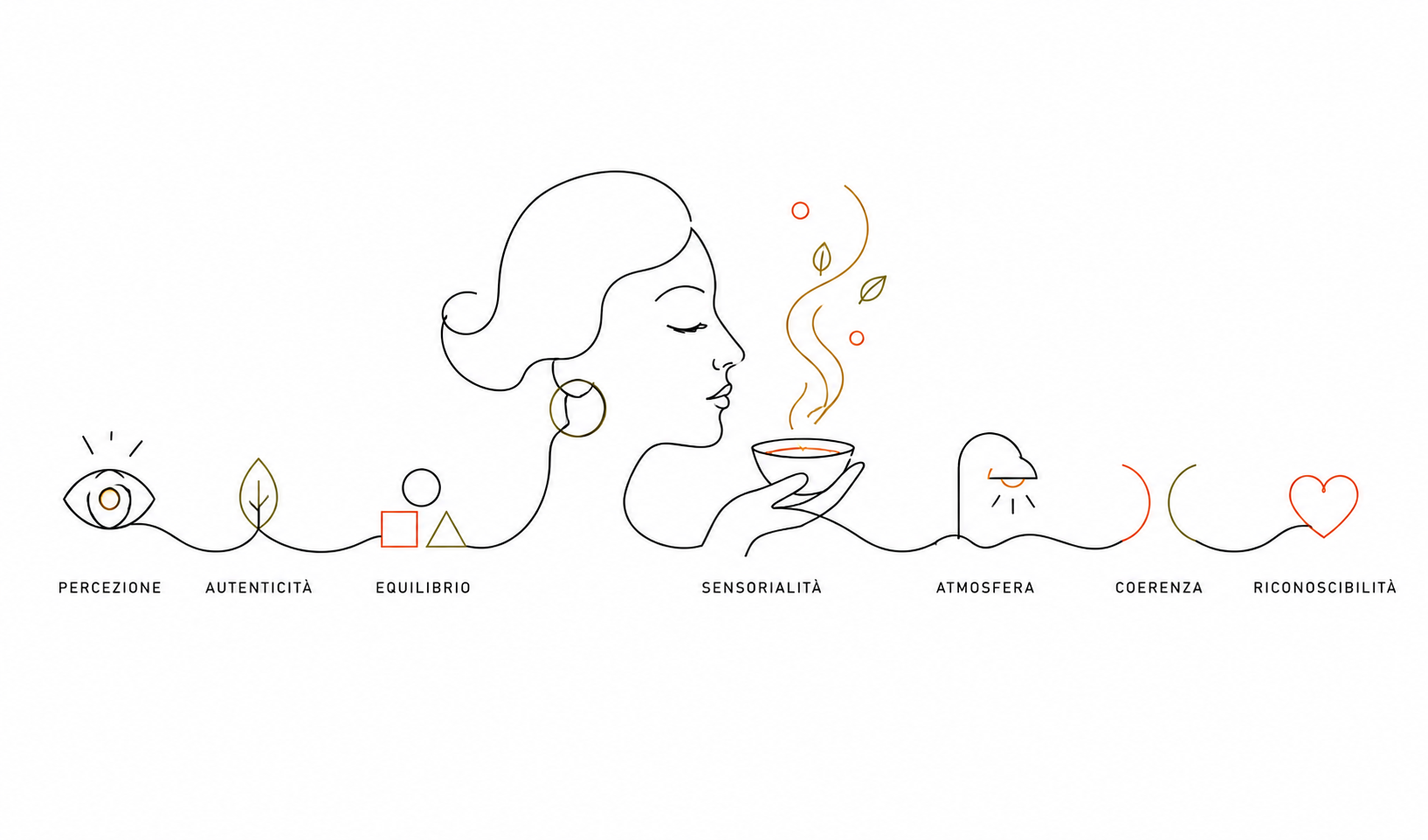
Walking into certain places produces an immediate sensation that is hard to explain.
It does not depend only on the quality of the furnishings, the light or the materials. It is something subtler. A kind of invisible balance between atmosphere, rhythm, silence, details and perception.
Some spaces seem designed to be looked at.
Others seem designed to be lived in.
Others seem designed to be lived in.
And it is interesting, because this difference is now redefining the way we perceive brands too.
For a long time, luxury coincided with ostentation. More visible signs, more decoration, more presence. Today, though, something is changing profoundly. The most interesting brands seem to be moving in the opposite direction.
Reducing.
Subtracting.
Letting things breathe.
Subtracting.
Letting things breathe.
In practice, perceived value no longer comes from excess, but from coherence.
And this is where Design del Gusto meets one of the most interesting themes in contemporary communication: sensory recognisability.
Because today people are not simply looking for beautiful products. They are looking for experiences capable of conveying a sensation that lasts over time.
A restaurant is not remembered only for what you eat.
A hotel is not chosen only for its service.
A brand is not perceived only through its logo.
A hotel is not chosen only for its service.
A brand is not perceived only through its logo.
Everything passes through a much broader relationship made of atmosphere, rhythm, materials, language, images, silences, light and perceptual continuity.
In some way the contemporary brain has become far more sensitive to incoherence.
It immediately senses when something is straining to appear premium without truly being so. The same happens in digital. Some sites seem built to impress. Others convey authority almost effortlessly.
The difference is often not technical.
It is relational.
Because identity today no longer comes only from what a brand shows, but from the kind of sensation it leaves in people after the experience.
And this is probably where the concept of taste takes on a new meaning.
Taste is not decoration.
It is not fashion.
It is not minimalism.
It is not fashion.
It is not minimalism.
Taste is perceptual balance.
It is the ability to remove noise until what really matters can emerge.
That is why the strongest contemporary brands seem less and less interested in “talking a lot”. They manage instead to create recognisable, almost atmospheric cognitive environments in which people feel oriented.
And it is interesting to observe how this phenomenon is crossing completely different sectors:
food,
hospitality,
retail,
wellness,
fashion,
design,
luxury,
even digital.
food,
hospitality,
retail,
wellness,
fashion,
design,
luxury,
even digital.
All of them are slowly converging in the same direction: building coherent experiences instead of simple communications.
After all, real luxury today is no longer excess.
It is the ability to be immediately recognisable without having to constantly attract attention.
And perhaps this is precisely the most important transformation of contemporary branding.
Not designing something that is merely seen.
But something that continues to be perceived even after it has disappeared from view.
FAQ — Contemporary luxury, branding and Design del Gusto
What does a brand’s sensory recognisability mean?
It is a brand’s ability to be perceived through atmosphere, materials, language, design and overall experience.
Why is luxury tied to coherence today?
Because contemporary consumers perceive communicative incoherence more and more easily, and reward brands that are authentic and recognisable.
How does design influence the perception of value?
Design builds emotional and cognitive expectations, influencing authority, desirability and perceived quality.
What does relational experience mean in branding?
It means creating perceptual and emotional continuity between brand and people across every point of contact.
Why do contemporary brands tend to simplify?
Because in an ecosystem saturated with visual stimuli, subtraction and clarity generate greater memorability and authenticity.
What is the relationship between Design del Gusto and communication?
Design del Gusto explores the way branding, perception, design and sensory experience are transforming contemporary communication.